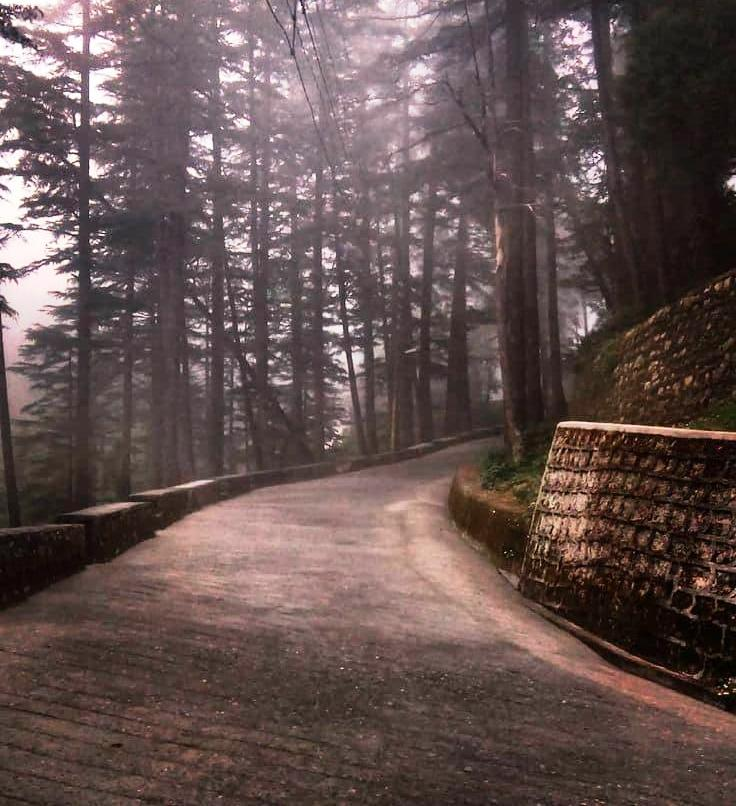
There is a reason Mussoorie is called the Queen of the Hills. Come here once, my friend—and if you don’t fall in love with Mussoorie, then tell me.
There are places you visit, and then there are places that quietly become a part of you.
For me, Mussoorie was one of those places.
As the road slowly climbed into the mountains, the air became cooler, the noise of the plains began to disappear, and the tall deodar trees seemed to welcome me into another world. Mussoorie is beautiful, of course—but somewhere beyond its familiar streets and busy corners lies a quieter, more intimate side of the hills.
That place is Landour.
If Mussoorie is the Queen of the Hills, then Landour is her heart—and the little cafés, old cottages, winding roads and deodar forests are the heartbeats that give it life.
And this is the story of my little journey through that heart.
A Morning in Mussoorie
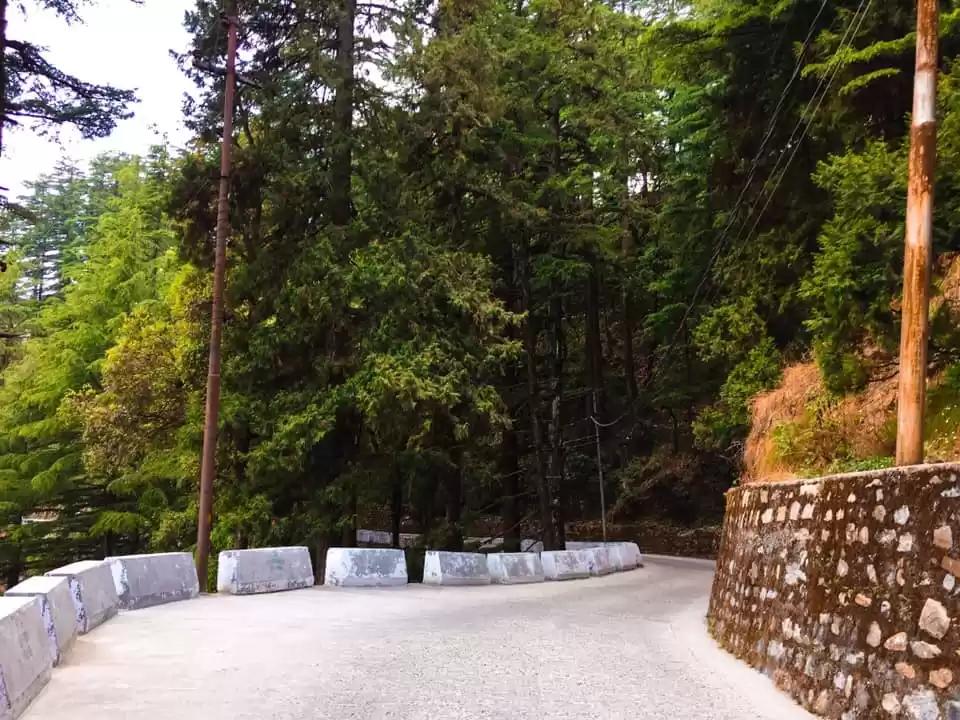
My journey began in Mussoorie, where every turn seems to come with a view.
The town has a charm that is difficult to explain to someone who has never experienced the mountains. There is the familiar bustle of Mall Road, the old colonial buildings, the distant mountains appearing and disappearing behind clouds, and that unmistakable feeling of being somewhere above the ordinary.
But I wasn’t looking for just another tourist destination.
I wanted to slow down.
To walk without constantly looking at the clock.
To stop whenever something caught my eye.
And perhaps, most importantly, to discover the Mussoorie that exists beyond the usual tourist checklist.
That search eventually led me towards Landour.
Emily’s — A Window Into the Winter Line
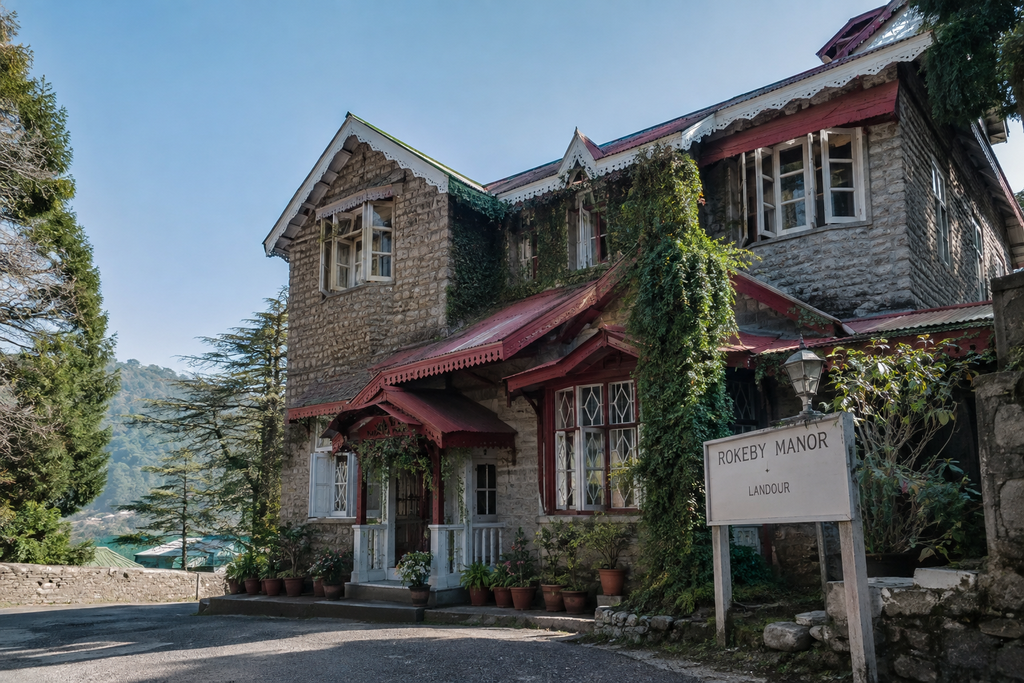
One of my stops was Emily’s at Rokeby Manor, a charming restaurant tucked inside the historic Rokeby Manor.
There is something special about sitting here. The atmosphere feels wonderfully old-world, with warm interiors, wooden details and large windows opening towards the mountain landscape. Emily’s is known for its Indian and Continental offerings, making it as much a dining experience as a place to simply sit and take in the surroundings.
But what caught my attention most was the window.
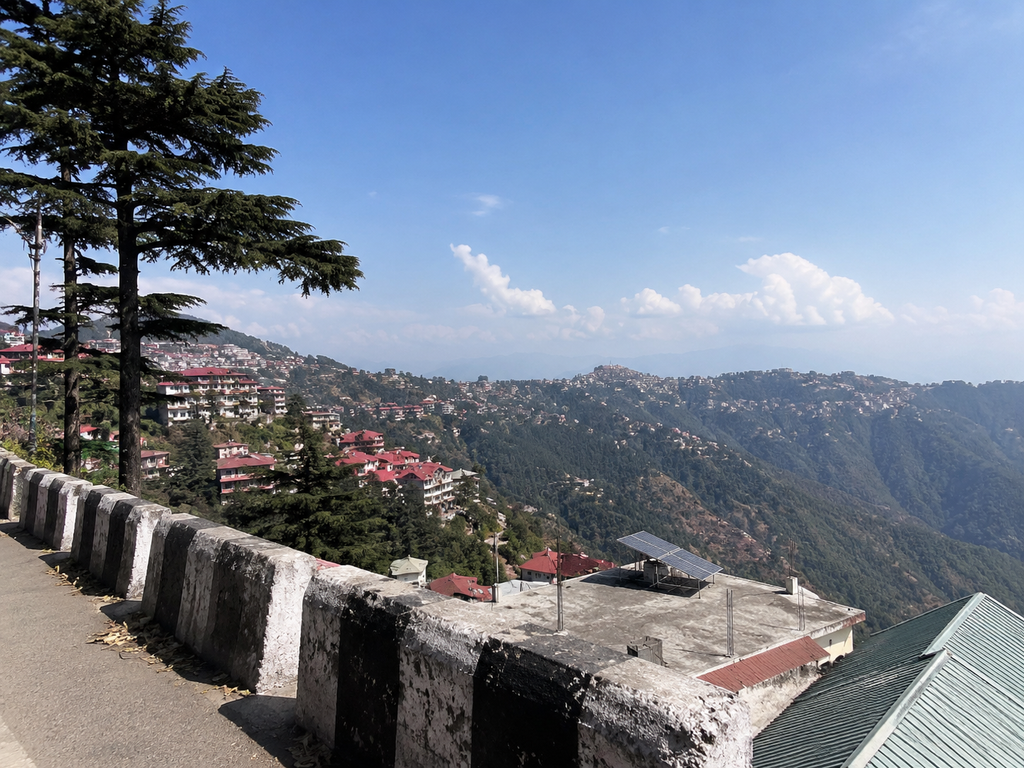
Outside, the mountains seemed to stretch endlessly into the distance.
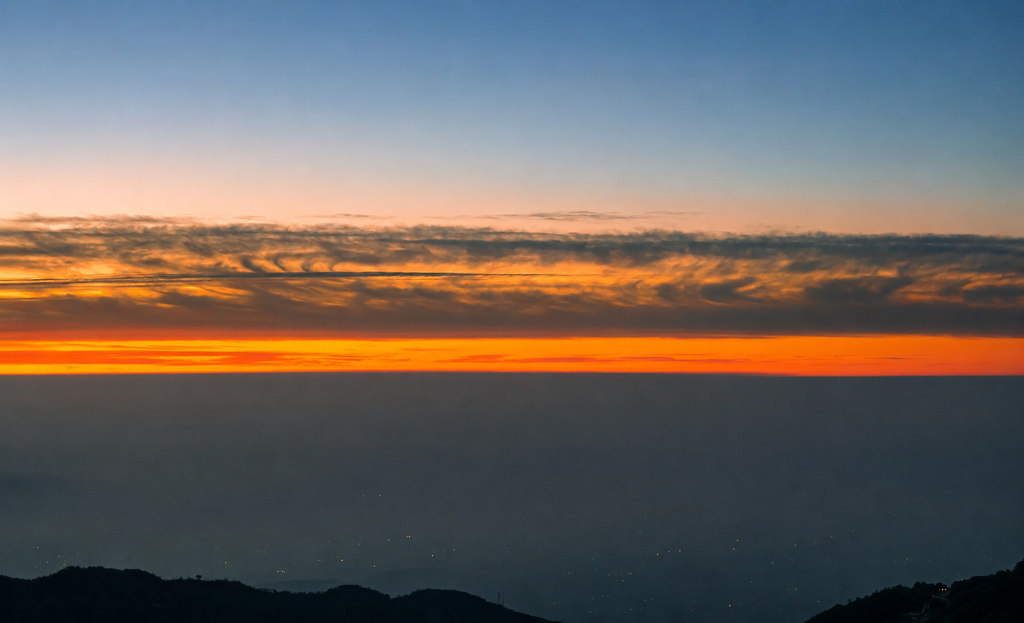
And if you happen to be there during the right season, you may witness one of Mussoorie’s most beautiful natural phenomena—the Winter Line.
For a few moments, the horizon appears to have been painted with a soft band of colour.
I simply sat there and looked.
Sometimes, the mountains don’t need to say anything.
They just need a window.
Landour Bakehouse — A Slice of Something Sweet
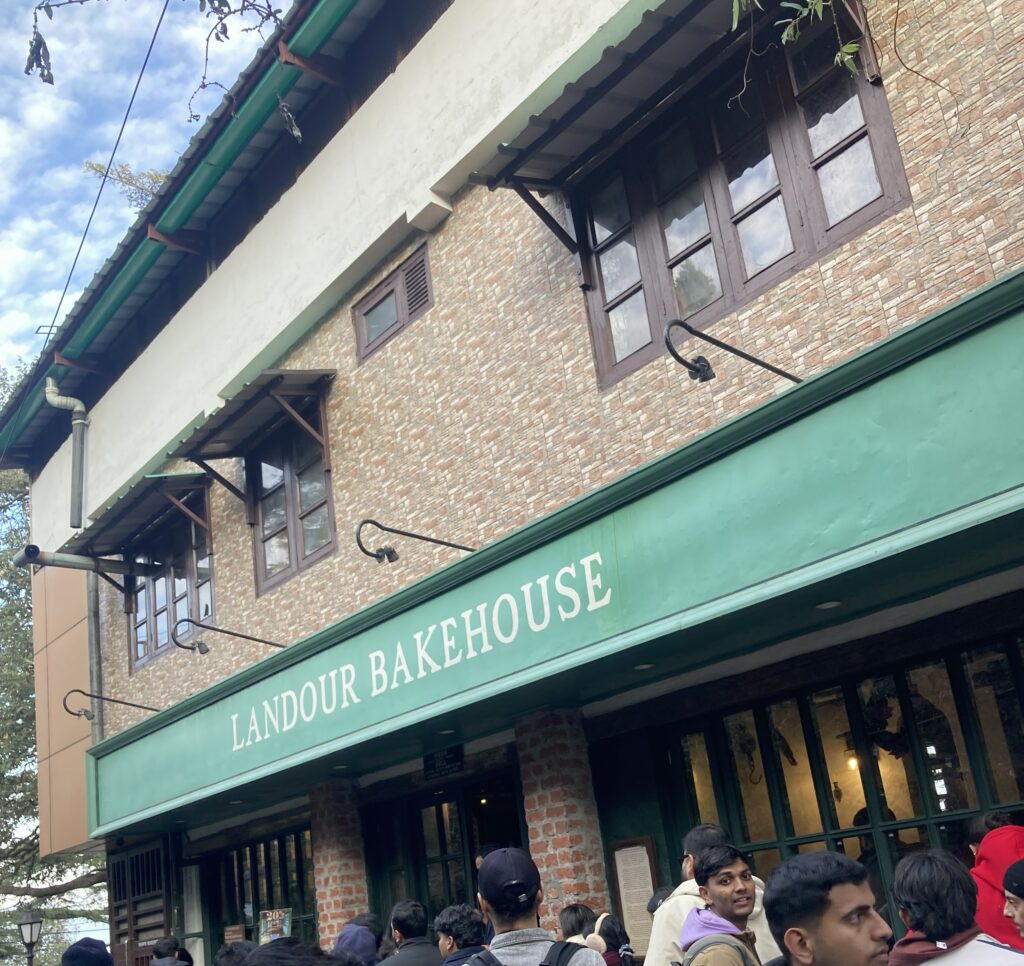
From there, the journey continued towards Landour Bakehouse, in the peaceful surroundings of Sister’s Bazaar.
Landour Bakehouse has become one of those places that feels almost inseparable from the Landour experience. The old-world setting, the aroma of freshly baked treats and the quiet rhythm of the neighbourhood make it an easy place to slow down.
And then came my little indulgence:
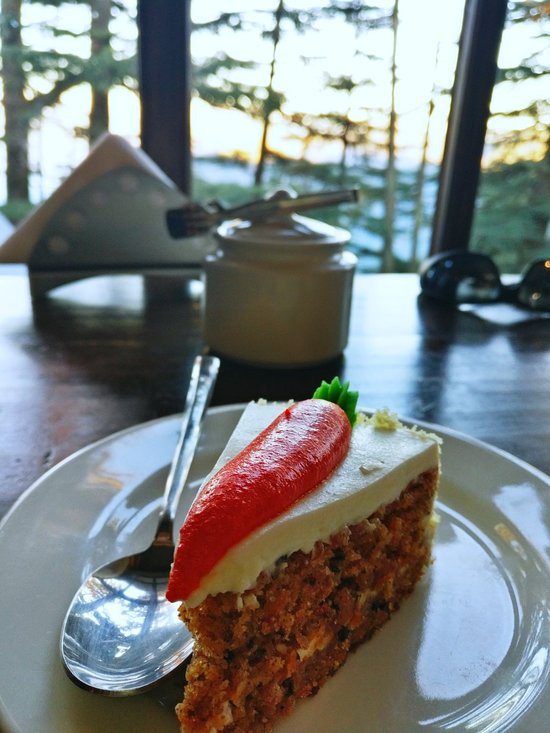
A slice of Carrot Cake.
It was more than just dessert.
After walking through the cool mountain air, sitting down with a slice of cake and something warm to drink felt like exactly what the afternoon needed.
The cake was soft, comforting and perfectly suited to the weather outside.
For a moment, there was nowhere else I wanted to be.
No itinerary.
No hurry.
Just a small table, a piece of cake, and the hills outside the window.
That is perhaps one of Landour’s greatest charms—it makes ordinary moments feel special.
Ruskin Bond’s Landour
From the Bakehouse, I continued deeper into Landour.
And soon, the name that seems to follow you everywhere in these hills began to feel even more real:
Ruskin Bond.
For generations of readers, Ruskin Bond’s writing has been inseparable from the hills of Uttarakhand. His stories have captured rain-soaked roads, forests, old houses, childhood memories and the quiet beauty of mountain life.
Here in Landour, those descriptions no longer feel like something from a book.
You can actually walk through the kind of landscape that inspired them.
His residence, Ivy Cottage, is located in Landour, close to Doma’s Inn. It is a private residence, so it is important to respect the privacy of the author and his family rather than treating the house as a tourist attraction.
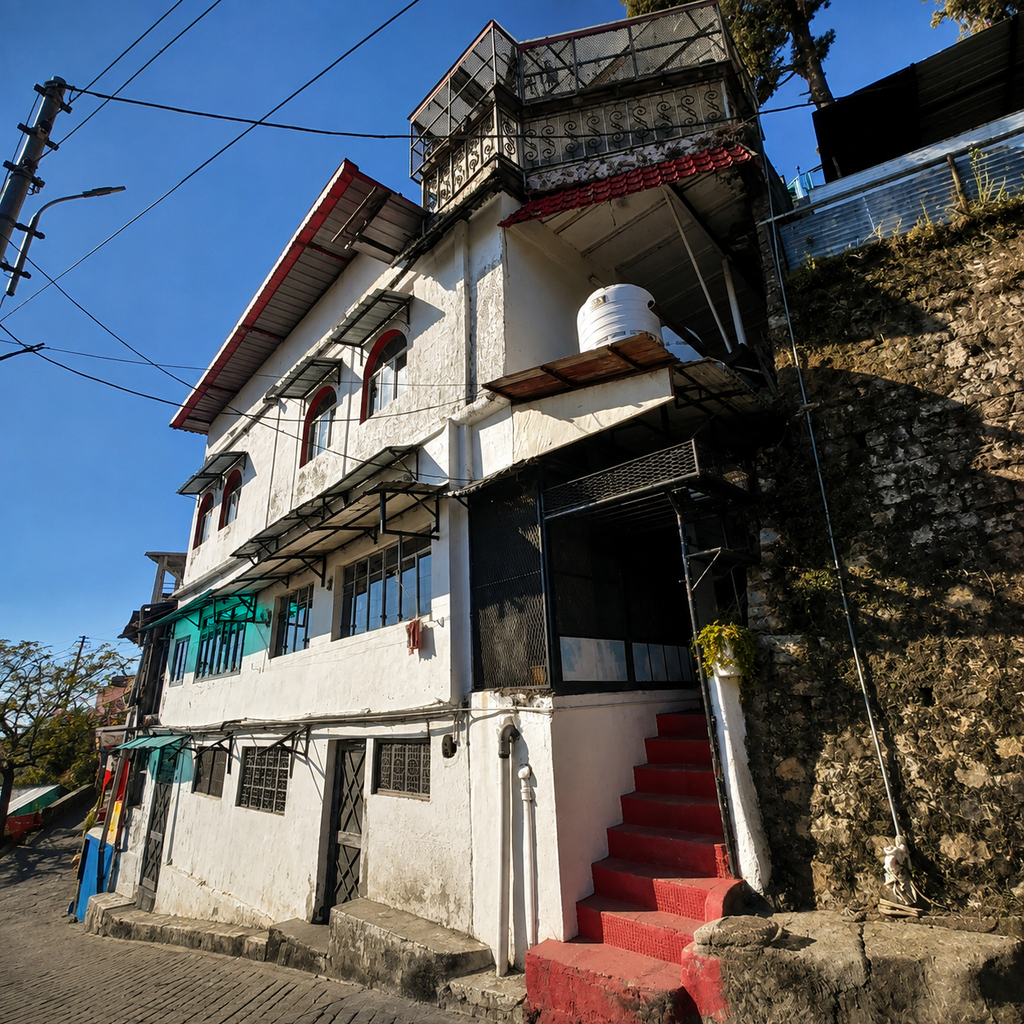
Standing nearby, I couldn’t help thinking about how strange and beautiful it is when a writer becomes so closely connected with a place that the place itself begins to feel like one of his characters.
Doma’s Inn — A Splash of Tibet in the Hills
Just nearby is Doma’s Inn, a colourful Tibetan restaurant and inn that immediately stands out from the quieter colonial architecture around it.
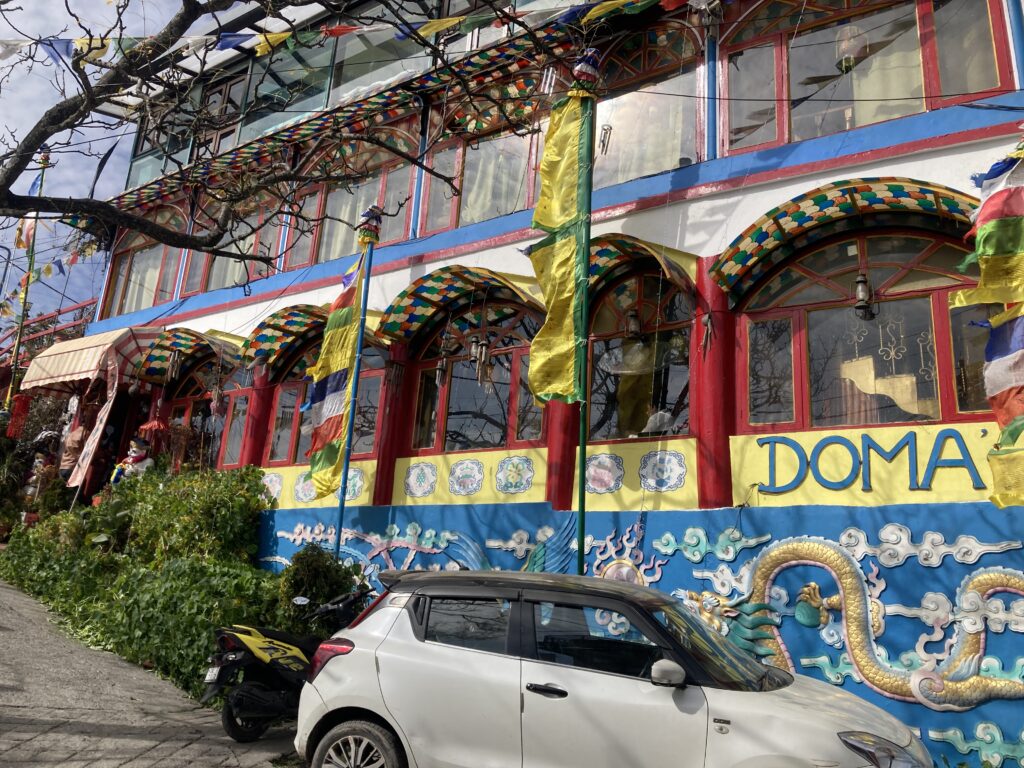
Its red-toned interiors, Tibetan artwork and distinctive atmosphere make it one of those places you notice even before you know its name.
Doma’s Inn serves Tibetan and Asian food, including favourites such as momos and thukpa, and its location makes it a popular stop for people exploring Landour on foot.
But for me, Doma’s Inn wasn’t simply another café stop. It felt like another page in Landour’s story.
One moment you are surrounded by colonial-era cottages and deodar trees; the next, you find yourself looking at colourful Tibetan art and sitting down to enjoy a completely different culinary tradition.
That contrast is what makes Landour so fascinating.
It never feels like it is trying too hard to impress you.
It simply lets its different stories exist side by side.
The Lal Tibba–Char Dukan Walk
And then came the part of the journey I had been waiting for:
walking through Landour.
Because the best way to experience Landour is not from behind the glass of a car.
It is on foot.
The narrow roads, the old cottages, the smell of deodar, the occasional sound of birds and the distant views of the mountains all become part of the experience.
The walk towards Lal Tibba takes you through some of the most peaceful parts of Landour. Lal Tibba is one of the area’s best-known viewpoints, sitting at around 2,275 metres and offering expansive views towards the Himalayan ranges on clear days.
But don’t rush to reach the viewpoint.
The journey is the real attraction.
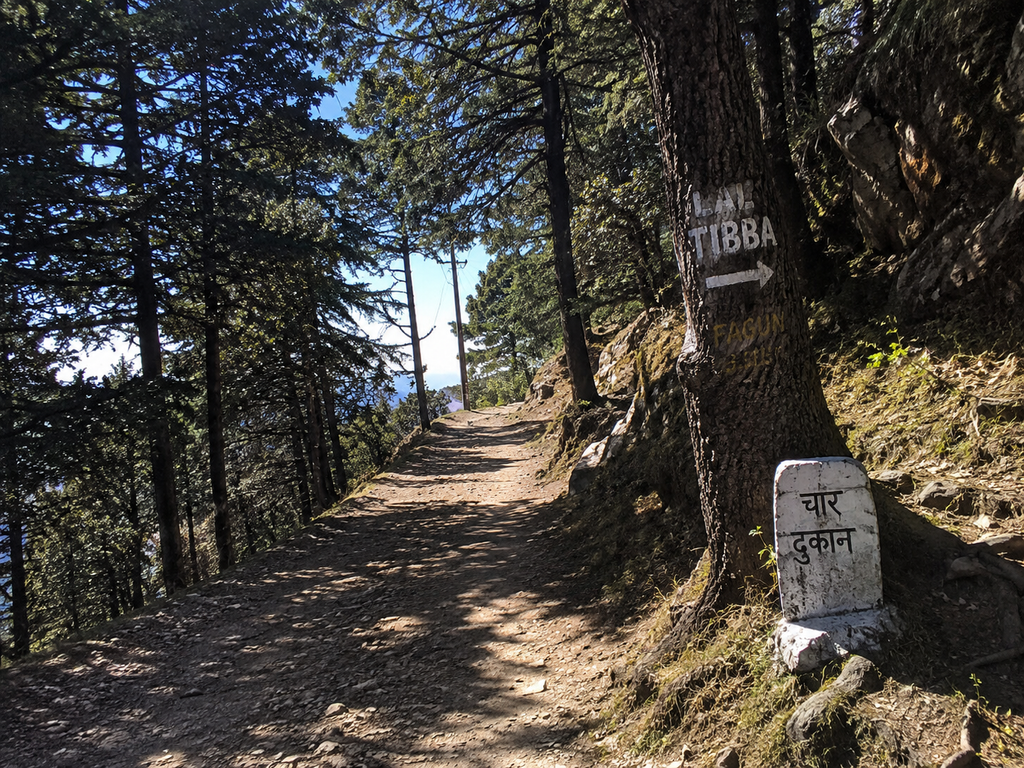
Walk slowly.
Look at the old wooden houses.
Notice the moss growing on stone walls.
Listen to the wind moving through the deodar trees.And every now and then, stop.
Because Landour has a way of rewarding people who are willing to slow down.
And Then There Was Char Dukan
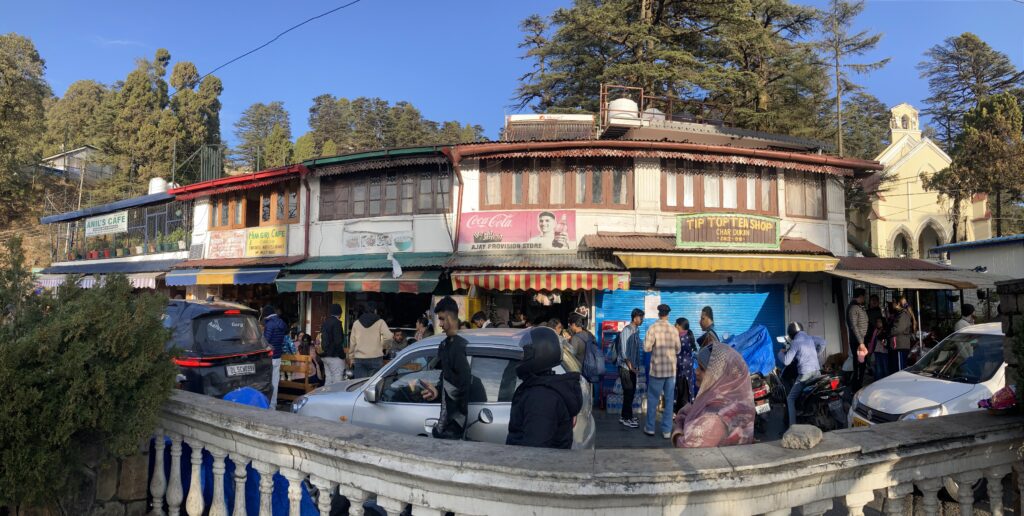
Eventually, the walk brings you towards Char Dukan—one of the most recognisable little corners of Landour.
Four old shops, mountain air, simple food, tea, conversations and a setting that somehow makes even a cup of coffee feel like an event.
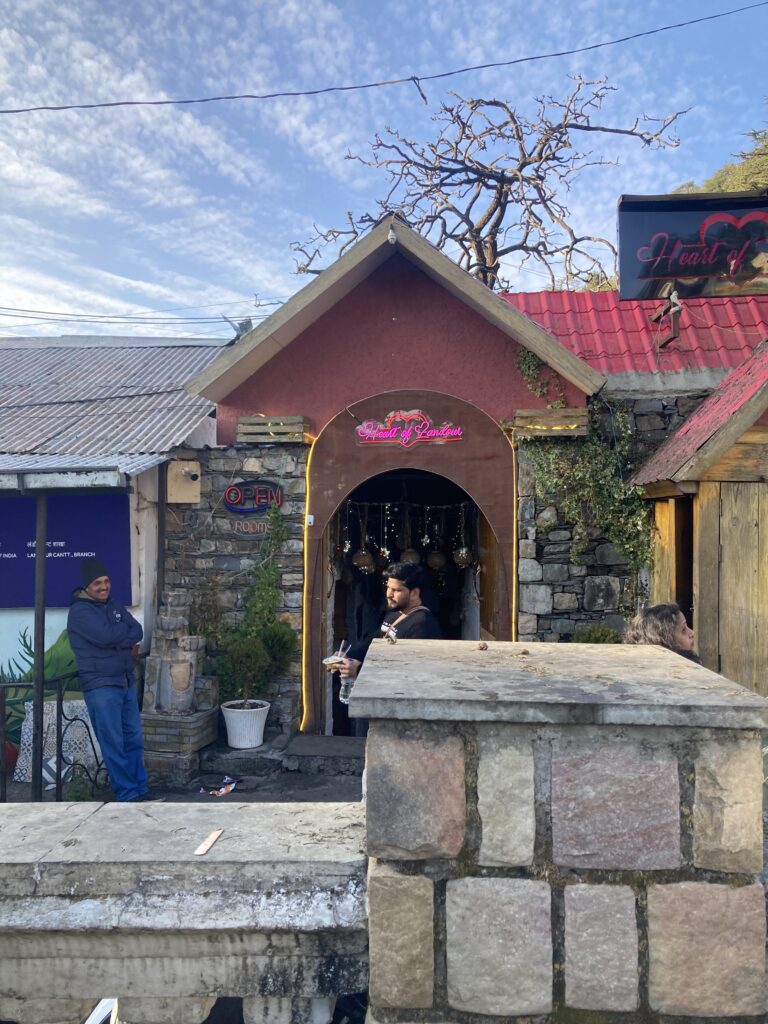
There is nothing particularly complicated about Char Dukan.
And perhaps that’s exactly why people love it.
You sit.
You eat.
You talk.
You look at the mountains.
And suddenly, you realise that you have been sitting there much longer than you intended.
Why I Fell in Love With Landour
By the end of the day, I realised that I had not come to Landour simply to see famous places.
I had come looking for a feeling.
And somewhere between Emily’s window, the Winter Line, a slice of carrot cake at Landour Bakehouse, the quiet lanes near Ivy Cottage, the colours of Doma’s Inn and the walk towards Lal Tibba and Char Dukan, I found it.
Landour doesn’t shout for your attention.
It whispers.
Through the trees.
Through old windows.
Through the smell of freshly baked cake.
Through a distant mountain appearing between two houses.
Through the pages of a Ruskin Bond book.
And perhaps that is why people return.
Because some places are not meant to be simply visited.
They are meant to be felt.
And Landour is one of them.